Let’s Go For a Bike Ride

As summer winds down and the upcoming school year approaches, A to Z Literacy wants to get more books shipped and into the hands of impoverished kids in Zambia as well as students here in McHenry county.

Please consider joining us on Sunday, August 25th, at 11:00 at Matt’s Tavern in Crystal Lake for their annual Spoker Run. Proceeds from the event will benefit A to Z Literacy Movement this year. The cost of the ride is $25 which includes a cool T-shirt and raffle tickets. Feel free to sign up ahead of time at Matt’s.

Get a group of friends together to spend a couple of hours in the sun, enjoying the afternoon, while helping us meet our 2013 goals to increase literacy. The leisurely eight mile ride begins at Matt’s, travels around Crystal Lake, and finishes back at Matt’s Tavern.  It’s sure to be a fun-filled day.

august 25

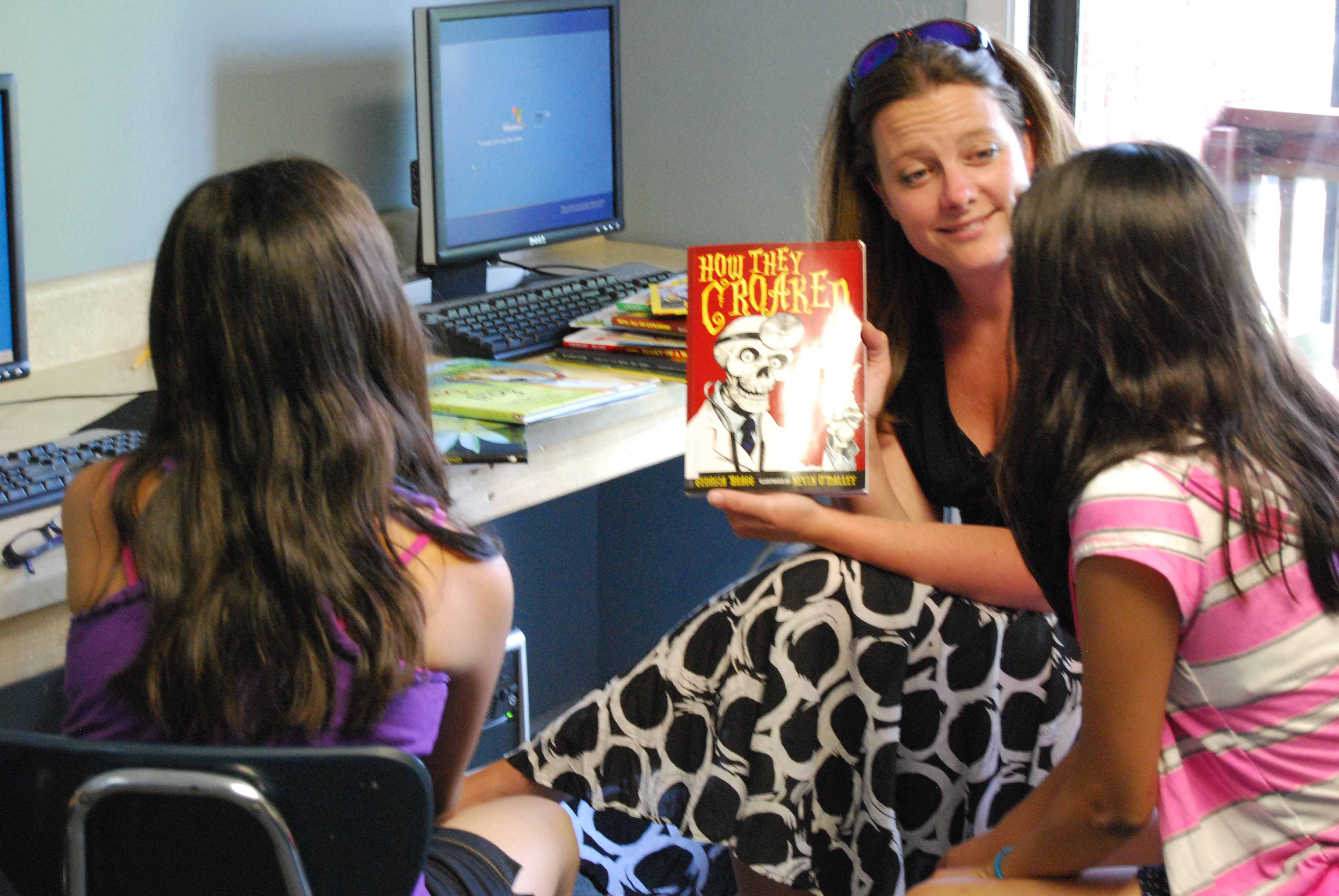
A Summer Afternoon Shared Reading

2013-07-11 02.54.48

By Anastasia Gruper

Daniella, Claudia, Jenny, and I congregated at the Garden Quarter with an incredible book on the Rebecca Caudill list this year: How They Croaked. Pocahontas and Julius Caesar were the chosen people today. Using our background knowledge, which consisted much of the Disney movie, we told the beautiful love story of Princess Pocahontas and John Smith. We smiled as we recalled the beautiful tale, and what a tale it was. In truth, Pocahontas was kidnapped at age 17 and forced to marry John Rolfe, a man who merely wanted her land to grow his tobacco crop. In an effort to make Pocahontas civilized, Rolfe brought her back to England where she contracted tuberculosis or pneumonia and died at aged 21 due to his lack of seeking medical attention. Claudia said it best, “It sounds like he was the uncivilized one.” Jenny was late to join our group, so we all listened closely as Daniella summarized and retold the story. Of course, Claudia was eager to jump in with details when she could. A great discussion followed about how uncivilized settlers were to the Native Americans when they came to the states.

As we moved on to Julius Caesar, Claudia recalled learning about him inventing the calendar. We all predicted how he died based on the picture. Although we all guessed he was stabbed, we had no idea how gruesome and gory the mass stabbing from the greedy senators would be. Daniella said it best, “All those guys died within a year; it sounds like they created their own bad luck.” We also discussed how a nice dictator was an oxymoron, but perhaps that’s what Julius was. As Daniella said, “He left his garden to the people and he left every citizen money in his will.”

As Mal drove us home today, we reflected on how the story boost went today. I don’t think I articulated it well in the car. However, sitting at home reflecting on the experience makes me realize what an incredible experience it was. I learned so much today. Thanks A to Z, Garden Quarter, but most of all, thanks Daniella, Claudia and Jenny!

Local Literacy

A to Z Literacy Movement is partnering this summer with a local nonprofit, Garden Quarter Neighborhood Resource Center. A to Z volunteers will head to McHenry, IL for Summer Story Boost, reading with small groups of children who are attending the resource center. Part of Garden Quarter’s mission is to encourage education and multicultural relationships which ties beautifully to the work of A to Z. Summer Story Boost will get books into at-risk children’s hands, help grow their love of reading, and increase their expressive and receptive language. We are proud to be working with this nonprofit and feel honored to serve another group of children. If you’d like to learn more about Garden Quarter, please check out their website, http://www.gardenquarter.org/ .

Shock Value

In the final part of our interview series, our Crystal Lake teachers answer one last question based on their Zambian trip in 2012.

Q. What was something that shocked you?

Kalan Gott: The high level of motivation to learn despite the challenges the students face shocked me.

Anastasia Gruper: We were well prepped for what to expect, but you can never be fully prepared for what you will experience. For example, Mal told us about Zam dogs. They are wild dogs that live in the streets. Obviously, they are not tame and should not be touched. However, they walk among the people. It was surprising to hear them fight at night, but the stench and sight of one that was killed in a fight cannot be described in words. The decomposing carcass remained on the side of the road, where people walk, for a few days; it was just one more addition to the filth people walked through daily.

Ann Yanchura: I was not prepared for the level of theft. Anything not nailed down is considered free for the taking. Some of the white missionaries attribute this to the communal attitude of people in the area of Lusaka; in other words, I am not stealing but rather you are sharing what you have with me. Regardless, the schools experience high levels of theft that they can ill afford. There are bars and windows on the doors to prevent anything large being removed. They can’t leave pencils, paper, or books in classrooms because they will disappear.

Mariann Zimmerman: The day we were at Mango Grove, I spent a great deal of time in a 5th grade classroom. The teacher presented a lesson about importing and exporting goods. The teacher did a fantastic job presenting the information in a way that the students could relate. As she was presenting, she was writing and making notes and diagrams on the chalk board. At the end, the students copied everything from the board into their notebooks. I asked the teacher if this was information needed to be successful on the Zambia test. Yes. Were all the students able to read what she had written on the board and were copying into their notebooks? No. Could they use their notebooks when they took the exam? No. This really bothered and still bothers me. How will most of them ever better themselves?

What’s Most Important?

Here is another Q & A session between the interviewer and our troop of teachers who spent time in Zambia last summer.

Q. What piece do you feel is A to Z Literacy Movement’s most important work? Why?

Kalan Gott: The most important work A to Z does is planting the seeds for a literacy culture. A to Z works to share tools with groups so they can foster a reading culture and be catalysts in their own communities. It isn’t about A to Z being the heroes. It is about the people of the community being their own heroes with A to Z as a sidekick. This is important because it means the change will last after A to Z leaves.

Anastasia Gruper: That’s a tough one to answer. A to Z has so many goals, which are all very important. However, the main goal to increase literacy in impoverished areas is the most important. Without independent thought and original ideas, a society cannot sustain or grow. Thoughts and ideas are only created and shared through literacy; reading, writing, speaking, and listening.

Ann Yanchura: While it would be difficult to argue that the many books that A to Z puts into children’s hands is the most important work they do, I would like to propose that this would not be as effective without the time, effort and care we put into building the professional practice of the teachers who work with these children. In my own “day job,” I have seen firsthand the need to build the confidence and instructional expertise of our teachers who are charged with the daunting task of preparing our students for a global society. All of the pressures and frustrations that go along with this responsibility are impossible to manage on your own. Each A to Z volunteer, under Mal’s thoughtful direction, serves as a guide on the side as well as a professional friend who will work through the tough spots with you and help you to gain confidence in yourself as you take steps towards growing as a teacher. It’s this “professional friendship” that will build the skilled and enthusiastic teachers who will help children get the most out of the books they have received from the A to Z Movement.

A Happy Time

By Gisela Carlander

A friend recently gave me a first grade reader she picked up at a garage sale. It had come full circle! The identification inside the front cover was from a first grade classroom in the district where I now teach. Upon opening it, I was immediately transported back in time, back to a different me. My inner child was awakened and I didn’t even know she was still in there. I felt the joy I knew as a child when I realized I was able to put those simple words together and make the story come alive. I visualized the world those words created and felt like I was in that world again. It was a very perfect world. Everybody’s clothes were pressed and clean, everyone wore a smile, the sky was always sunny, and people made mistakes but nobody was bad. I felt the innocence and exuberance of childhood, full of expectations and excitement about getting to know the world. But best of all, this little book showed me how great it felt to be able to read all by myself. More than the simple stories I worked my way through with books like these, these books showed me that there was a whole world out there I could find out about all by myself. What a wonderful feeling that was – the simple action of opening this book and seeing those pages and words again, brought the clarity of that awakening back to me like a heartbeat that I had stopped noticing. What a blessing reading is!

Middle School Role Models

wow 3

wow 4


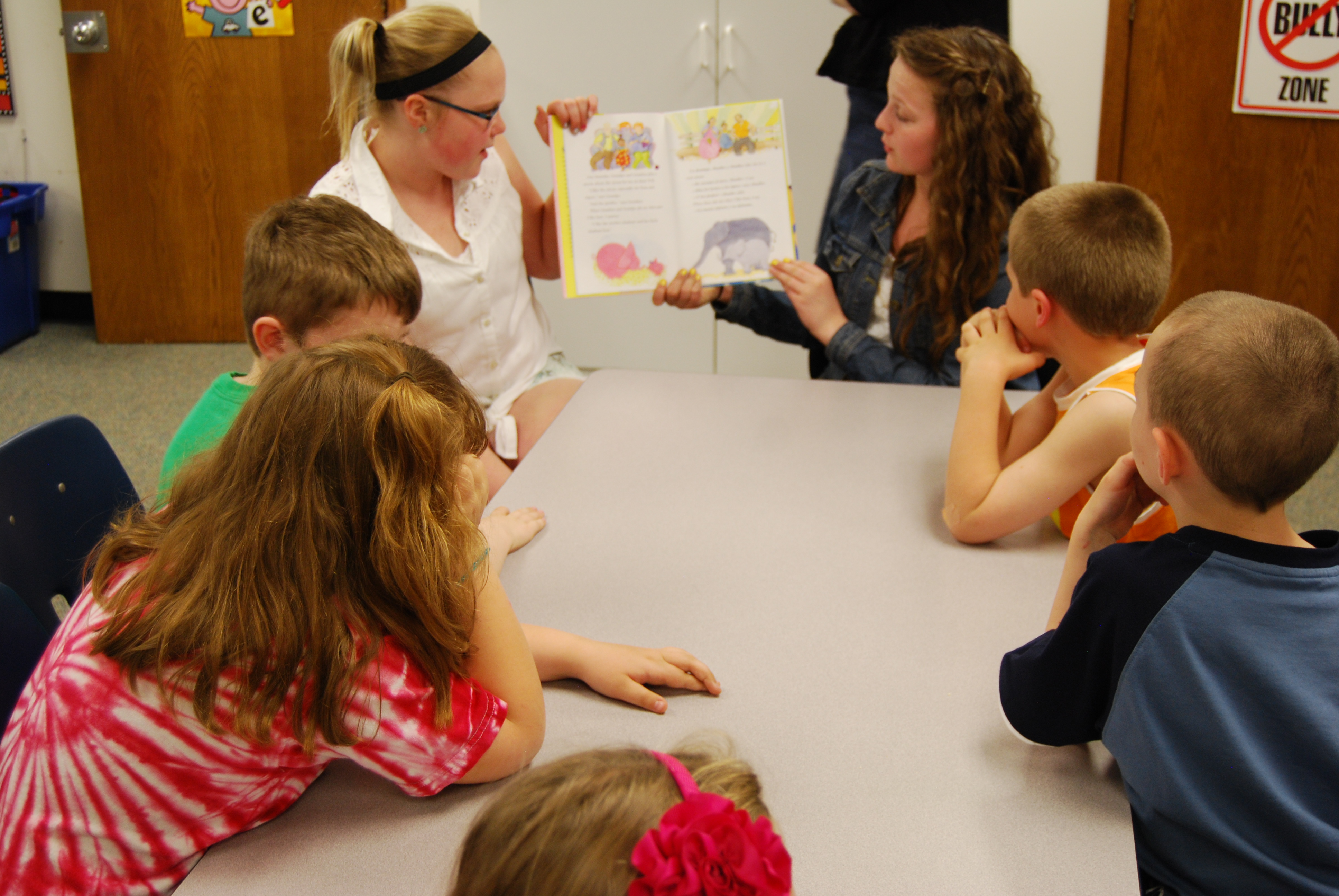
wow 2Small groups of students from Bernotas Middle School, Lundahl Middle School, and Hannah Beardsley Middle School explored multicutural literature throughout the year and shared stories with first grade students at Canterbury Elementary in Crystal Lake, IL. These talented kids participated in the World Of Words project from the University of Arizona, and have helped not only students in Crystal Lake, but will also assist teachers and students in Zambia at Chishiko Community School. The books shared locally will soon be packed up and sent to benefit students at Chishiko. In addition, the middle school students created activities to pair with the multicultural stories and those lessons will help Zambian teachers extend the learning, increasing oral language and reading comprehension. These talented middle school students gave of their time and are to be applauded for helping to increase the love of reading locally and globally.


A Relationship With Literacy

By Kalan Gott

The last few weeks I have loved watching early readers begin their relationship with literacy. I am the first grade recess supervisor at my school. When the year started, the first graders were just beginning to read and figure out text. Now, everyday I have students coming up to me and showing me the new books they got from the library, shop, or book fair. Watching five students all huddled around one book, under the shade of the playground equipment, straining to see the pictures and figure out the words is pure joy. It is that exact joy that A to Z seeks to spread with every box of books shipped, every penny donated, and every visit to Zambia. A to Z is like the Match.com of literacy. We are attempting to find each child his or her perfect book so that he or she may develop a life long relationship with literacy. When did your relationship with literacy begin? What book sealed the bond? How are you helping other young people develop their relationship literacy?

Be Astonished

walkathon

Instructions for living life.
Pay attention.
Be astonished.
Tell about it.
~Mary Oliver

By Anastasia Gruper

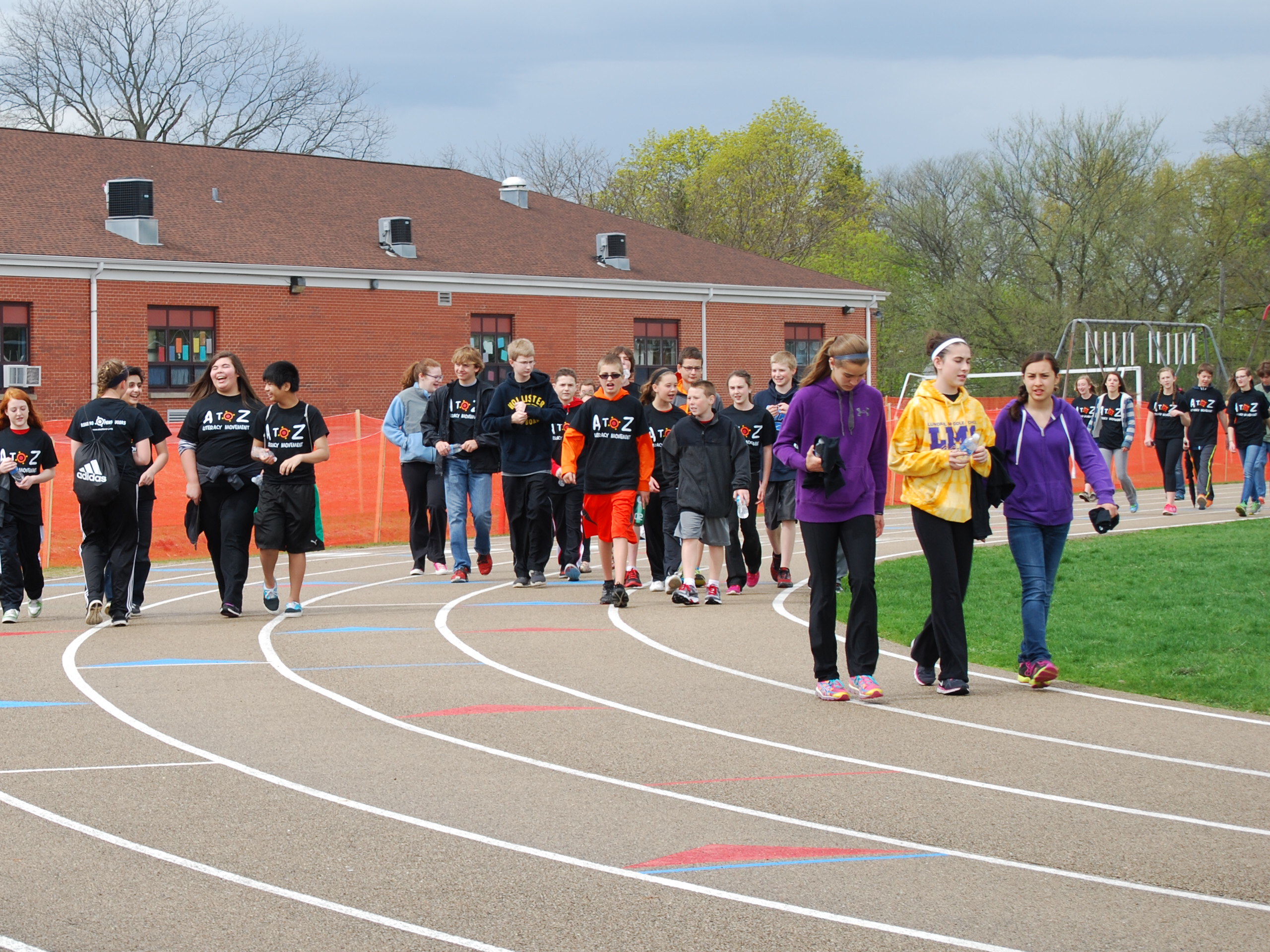
After attending a Walk-A-Thon with hundreds of National Junior Honor Society students from Bernotas Middle School and Lundahl Middle School on May 4th, there is much to tell. Friendly faces, generous givers, and promenading pupils gathered at Bernotas Middle School at 9:30 am to raise money for A to Z Literacy Movement. While the band jammed, students walked around the track, logging miles and service hours. Generous donations totaled $7, 227. With these generous donations, impoverished students will receive school lunch, books, and quality teachers. Such incredible efforts were made by these NJHS students to improve literacy globally. For that, we are truly astonished.

Lifelong Learner

book heart

As an adult, how do you continue to grow? Recharge with new perspectives and ideas? Maintain focus and clarity? For some, it’s a conference or workshop that enlightens and affirms the work you are doing. Maybe it’s a book club with friends or colleagues, discussing chapters while new ideas are brought forward. Others prefer articles and blogs – a quick in and out – yet effective and valuable. Regardless of how you go about it, being a lifelong learner is something to be celebrated and reading is an integral part of the process. Reading opens up the pathways in your mind and helps you to see things in a different light. Reading changes you…for the better.