Anne Smedinghoff was taken from us this week.
En route to deliver books into the hands of Afghan children, Anne and her group understood the power of literacy and the strength it steadfastly delivers to all who share it.
Rest easy, Anne.
The lessons will be taught.
The mission continues.
Your brightness shines on.
Category Archives: Uncategorized
Favorite Scene in Zambia
By Pat Kelly
In our ongoing series, we present the responses to another question asked of the four traveling teachers who trekked with Mal Keenan to Zambia in the summer of 2012.
Q. Describe for us your favorite scene in Zambia.
Kalan Gott: The clatter of the cowbell alerts students to morning break. Instead of rushing out the door at the sound of the bell, the students hang around the room. A group of students see a book left over from the lesson and swiftly grab it up exploring each page and helping each other as they attack the words, breaking them down, creating meaning. All of this taking place on their own time.
Anastasia Gruper: Personally and professionally for me it was sitting in a room with four other amazing, intelligent women. The collaboration about new experiences and a new culture helped me learn. To have the opportunity to discuss and problem solve new challenges while teaching was invaluable. The four supports I was able to draw from daily will be a scene I will never forget, even if it was a scene I experienced by headlamp!
Mariann Zimmerman: My favorite scene (and it still brings tears to my eyes) is seeing Mal with her Shine graduate students. The impact she has made on those students’ lives, both academically and socially, is life changing. They truly look up to her, respect her, and admire her for what she has brought to their lives. I loved watching her in action as she spoke individually to each student, got in their precious faces and reminded them of their goals and to reach those goals they have to keep reading.
Ann Yanchura: Our work with a new school, Chishiko, almost didn’t happen because of our very full schedule of commitments to other schools. However, due to Mal’s willingness to help where she can, we now have a new partner in a school that is an experiment in building community commitment to education in Zambia. The young missionary couple who are responsible for this dream welcomed us with open arms and many thanks when we visited.
Picture a field in the hills of Chumba Valley that has now been transformed into a soccer field. When we arrived, the children in the area were allowing their cattle to graze on the grass of the field. They quickly began to herd the animals away as they saw us drive up, knowing that Pastor Steven wants to cultivate healthy grass for the games they will play there. The two room newly-built school house sits next to the field. Although this building currently hosts only the preparation class (preschool/kindergarten) and first grade, students up to age 12 show up daily for lessons. When it’s time for morning break, the preschool teacher washes 31 pairs of small hands with water from a plastic jug sink. Where else would you find dedication like this?
Success On the Vine
By Jorian Lewke
Thank you, thank you, thank you to all of you that came out on February 23rd to help celebrate our mission and vision while contributing to our goals. Our 3rd annual On the Vine: Celebrating Books and Wine silent auction and wine tasting was a success – we raised over $5,500! We owe our success to our dedicated board members, our supportive sponsors and donors, and most of all, to the attendees who came and celebrated literacy with us. Without all of your continued support, A to Z would not be able to continue it’s mission: to improve the lives of impoverished children through literacy development in Zambia and the Chicagoland area.
Why You Should Come to On the Vine: Celebrating Books and Wine This Saturday
- Fantastic wine to taste and a terrific way to expand your cab/chard/pinot knowledge.
- Delicious appetizers to enjoy while mingling with fun people.
- Very cool auction items to be won for a sweet deal.
- There’s nothing really on TV to watch.
- Cabin Fever has set in…it’s time to start thinking about leaving your house on the weekends.
- Wine Pong – test your skills with that little white ball to win a prize. Think “Adult Fun Fair”.
- The Dole is a beautiful place to hang out – vintage Crystal Lake.
- You’ve been dying to wear your new jeans and sweater.
- You can buy a beer if you’re not hip to the red and white vino.
- You can help kids, locally and globally, to increase their love of reading.
Head to our website for tickets or buy them at the door!
Providing for Teachers
One of our yearly goals is to provide funds for one teacher’s yearly salary which is about $1700. A to Z believes in assisting diligent teachers to provide a positive learning environment. With half the population under the age of sixteen, these vulnerable children need teachers who will persevere. Committed to working side by side and explaining best practice, A to Z helps these men and women in impoverished communities become more skillful and knowledgeable teachers.
We hope you can come to the Dole Mansion on Saturday, February 23rd at 7:00 to celebrate the work we have accomplished and help us to meet our 2013 goals.
Visit our website for tickets and more information. http://www.atozliteracy.org/page32.html
What’s the Cost of School Lunch in Zambia?
I recently asked Vineet Bhatnagar, founder of Shine Reading Academy, about the cost of school lunch for 2013. As many of you probably already know, one of our goals is to assist Vineet with feeding the 160 students attending his school daily.
Here’s his response:
The cost of the feeding program has increased significantly since last year for a couple of reasons. Firstly, the Zambian Ministry of Education stopped distributing maize meal and beans to schools in Lusaka, including ours. To date, I don’t really know why. As soon as the government took over the distribution of World Food Programme food from WorldVision, the flow of food became erratic and then stopped. So, we’re having to buy the maize meal ourselves.
On top of that, the cost of charcoal has increased by about 50% and we’ve expanded the school from 110 to 160 pupils.
So the new figures (in USD) are:-
Cost to feed the school (160 pupils) for 1 year = $2,795
Cost to feed the school for 1 month = $315
Cost to feed the school for 1 day = $14.33
A to Z is committed to the continued support of Shine Reading Academy. It is a successful school, educating the most vulnerable children in the area, and making a dramatic impact on the lives of the students attending classes. These resislient children need to be nourished in both mind and body.
We hope you will consider attending our annual fundraiser on February 23rd to help us meet one of our goals – to provide funds for three months of school lunch.
An Evening To Remember

As winter wears on and temperatures drop, it always helps to have something to look forward to – a evening with friends and great music – a silent auction and delicious wine to taste. Consider making plans to attend On the Vine: Celebrating Books and Wine. The third annual fundraiser will take place at the Dole Mansion on Saturday, February 23, 2013 at 7:00 pm. Money raised during this enjoyable evening will help A to Z Literacy Movement meet their 2013 goals. Many of you already know the nonprofit’s goals include: shipping books to impoverished schools, providing funds for school lunch at Shine Reading Academy, and providing funds to cover one teacher’s yearly salary at Shine. Please consider coming out to taste a few delectable wines, enjoy yummy appetizers, and help to increase the love of reading around the world.
You can purchase tickets for the event at www.atozliteracy.org.
Favorite Teaching Moment?
By Pat Kelly
In July 2012, Kalan Gott, Anastasia Gruper, Ann Yanchura and Mariann Zimmerman accompanied Mal Keenan to Zambia. The following post is another Q & A with these incredible teachers.
Q. Tell us about your favorite teaching moment.
K.G. My favorite teaching moment involved a group of older students teaching a group of younger students. It was in our second week of teaching. We were at Mango Grove community school. A missionary from a church was substitute teaching and had an idea to have the older students read to the younger students. The end of the school day was approaching so we all met outside near the water tower to talk about what was next. Walking out there I was exuberant. I felt like I was witnessing a shift in the reading culture right then.
A.G. Every time I prepared a lesson, I tried to create something that teachers could reproduce. For one lesson, the purpose was to have students explain a balanced diet. Faced with the challenge of teaching a balanced diet to malnourished children, I knew I needed to create a word bank of foods for them to use in their writing. I spent hours, by headlamp as we had no electricity, drawing and cutting out pictures of foods. After having the children work in groups to sort the foods into different food groups, they worked together to add foods to the list before they wrote their sentences. It was amazing to watch them work together to generate lists. At the end of the lesson, the teachers asked if they could keep the cut outs for their other classes.
A.Y. I worked with a young teacher who is also a pastor; David is enthusiastic, hardworking, well-read, and committed to living a life of service to others. When he asked me to help his students learn how to read hard words, we had fun practicing sounding out and taking apart multi-syllable words. Both he and his students took great delight in simple multi-sensory activities such as using a rubber band to “stretch out the sounds.” It was this pure delight and his deep gratitude (that far surpassed my due for the little bit of help I’d given) that will stay in my heart forever.
M.Z. The morning we spent at Chishiko School was quite memorable for me listening to Bornwell’s lesson for part of the morning and quickly planning how we can help him and the students learn and apply what he is teaching. It was a valuable morning and I often think how much more we could have done if we could have worked together for a week or two.
Email From Mango Grove School
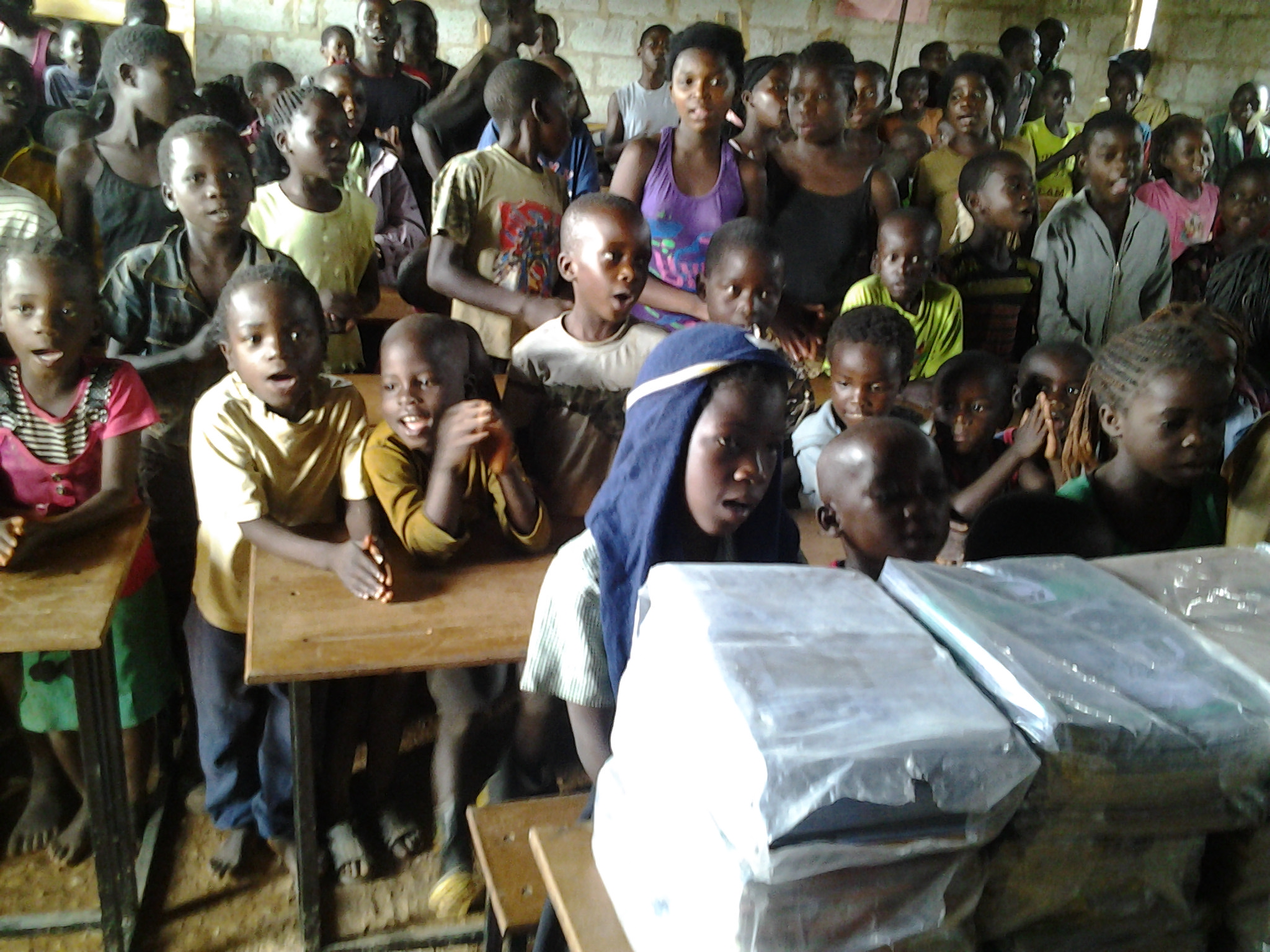
Hi,
Hope you are fine, were are doing fine at Mango Groove School in Zambia.
I would like to first of all apologise for taking too long to communicate on the progress at school. Thanks very much to you for introducing to us Mr. Masausto (from the Rotary Club). They have done the shelves and just last 2 weeks ago (12th Jan) they donated 60 desks which accommodates 3 children per desk and also some books.
Therefore we say thank you very much because the kids can now seat comfortably.
Once again, thankyou and HAPPY 2013.
Mrs. J. N. Lengwe (Headteacher)
Q & A with A to Z Teachers
By: Pat Kelly
Here is the next installment, continuing the series of interview questions answered by the teachers who traveled to Zambia in July 2012.
Q. What evidence did you have in Zambia that validated the work you were doing?
Kalan Gott: When we visited the schools, we saw schools that had increased the number of teachers in order to meet the needs of more children wanting to learn to read and write. Most importantly we were visited by a group of students that had graduated and gone on to public school and came back to tell us how they were still in school.
Anastasia Gruper: Making personal connections with teachers and kids was a rewarding experience. We spent many hours teaching, modeling, observing, and creating relationships with the Zambian people. Watching students create original ideas through pictures, writing and speaking validated that the work we were doing was making a difference. While in class observing teachers, students would pass notes to us; they sought us out when they arrived at school; and former students returned, often walking at least an hour, to reunite with their former traveling teachers. When teachers created visuals and used teaching strategies we had modeled, it was evident that small changes were occurring. Through our conversations it was also evident that teachers and students comprehended at deeper levels.
Ann Yanchura: The overall success of Shine Reading Academy stands as the most striking evidence of the success of A to Z’s work in the Lusaka area. Mal has been beside them since their early days and has guided the directors, administration, and the teachers towards excellent literacy instruction ever since then. When you compare Shine’s instruction to other schools in the area, you can see that they are well on their way to preparing their students for the literacy demands of the world beyond their immediate neighborhoods. The graduates who return in droves to spend time with the A to Z volunteers each year are evidently well prepared and driven to succeed when compared to their peers. I firmly believe that A to Z has had a great influence on these students.
Further evidence of our work is in the fervent and heartwarming acceptance and love that the teachers show to us in our collaboration. They are welcoming, honest, open to our suggestions, and hungry for both the professional and personal benefits they evidently receive from working with A to Z volunteers.
 A to Z Literacy Movement Blog